Nepal Rastra Bank Report Unmasks Toxic Lending Practices and Surge in Bad Loans Across Commercial Banks
Nepal Rastra Bank’s FY 2024/25 Annual Supervision Report reveals a worrying financial decay within the banking sector, as bad loans cross Rs 220 billion and internal audits expose deep-rooted systemic manipulations like "evergreening."
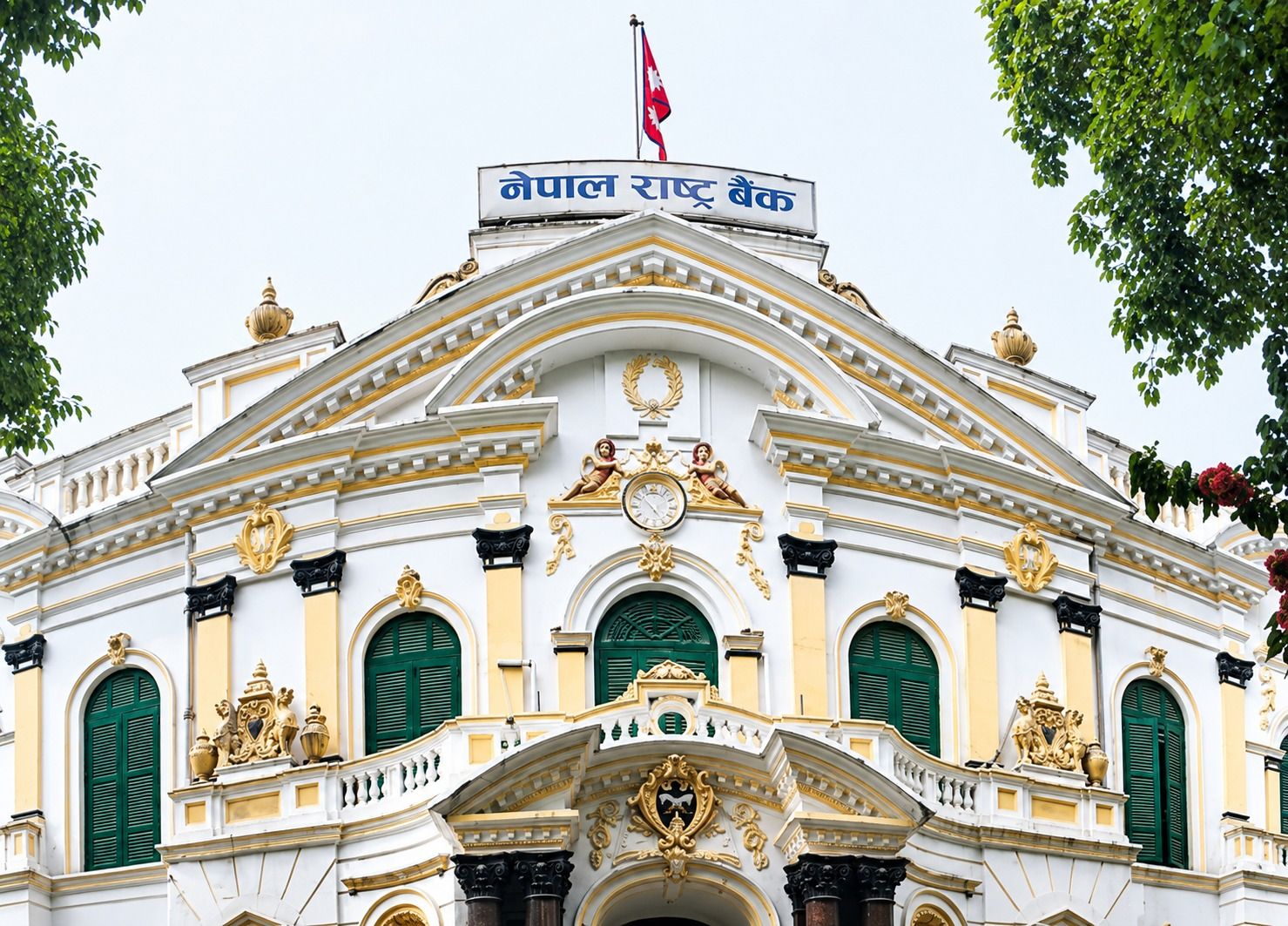
The Bank Supervision Department of Nepal Rastra Bank (NRB) has officially released its Annual Supervision Report for the Fiscal Year 2024/25, signaling a stern warning over the weakening asset quality and institutional compromises within the country's commercial banks. Despite an expanding deposit base—which grew by 13.63% to reach Rs 6,541.65 billion—and a total loan volume scaling up by 10.49% to Rs 4,963.15 billion, the central bank highlighted that severe capital adequacy pressures are building up. The report points out a striking mismatch in the economy: while the deposit-to-GDP ratio stands at a healthy 105.51%, indicating wide financial access, the credit-to-GDP ratio has shrunk to 80.05%, demonstrating a slowdown in productive sector lending. The core of the central bank's concern lies in a massive 22.40% spike in default volumes, pushing total Non-Performing Loans (NPLs) to a historic high of Rs 220.33 billion. The banking industry's average NPL ratio climbed aggressively from 3.76% in the previous year to 4.44%, with state-owned banks leading the deterioration at 4.56%. Compounding the crisis, Non-Banking Assets (NBAs)—real estate collaterals forcefully seized by banks after default recoveries failed—skyrocketed by 41.77% to hit Rs 42.75 billion, an overwhelming majority of which is trapped within private commercial banks. Financially, while aggregate industry profits managed a 5.90% growth to sit at Rs 52.82 billion, the gains were entirely asymmetrical; state banks saw profits soar by 76.08%, whereas private banks experienced a 2.75% contraction in their net earnings as loan rates plunged down to an average of 7.85%. Beyond deteriorating financial charts, the supervisory report laid bare shocking, deep-seated corporate governance infractions and regulatory manipulations. Most notably, the central bank exposed an active industry practice of "evergreening," where banks deliberately issued fresh loans to delinquent borrowers at the end of financial quarters strictly to clear up past-due interest and principal, effectively masking the true scale of toxic credit. Furthermore, auditors discovered that newly disbursed funds were routinely routed straight into the personal accounts of the banks' own board directors or highly connected insiders, with the lending institutions completely bypassing mandatory end-use verification. Structurally, NRB criticized the subversion of internal safety protocols, revealing that Chief Risk Officers (CROs) and internal audit heads are frequently subjected to performance evaluations managed directly by the bank CEOs, stripping them of their independent oversight power. The central bank also red-flagged instances where new board members were arbitrarily appointed during closed-door sessions and retroactively approved by General Meetings months later, alongside widespread operational failures such as running ATM systems on legacy, unpatched software. Warning commercial banking institutions against these deliberate regulatory bypasses, Nepal Rastra Bank asserted it has implemented enhanced oversight structures to halt compliance evasions and protect depositors' equity.