Circuit Breaker in NEPSE – NEPSE Halt Rule Details
A circuit breaker is a rule adopted by Nepal Stock Exchange to control unreasonable price fluctuation. NEPSE halt rule will be activated when the overall NEPSE index hits a certain percentage within a specific time. Here is everything you need to know about the circuit breaker rule in NEPSE.
What is a Circuit Breaker in NEPSE?
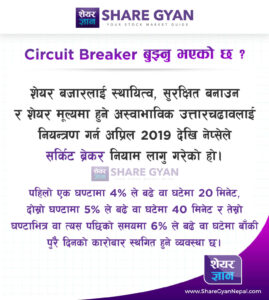
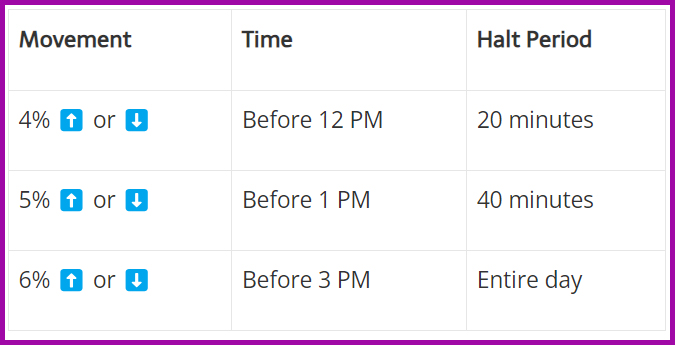
A circuit breaker is a rule adopted by Nepal Stock Exchange to control unreasonable price fluctuation. If the NEPSE index fluctuates 4% within the first hour of regular trading (before 12 PM), trading will be suspended for 20 minutes. If NEPSE fluctuates by 5% within the second hour (before 1 PM), trading is suspended for another 40 minutes as a second circuit. After that, if the market index fluctuates by 6%, all transactions for the rest of the day will be suspended.
This halt gives market investors time to analyze events, news, announcements, and make necessary rational decisions. NEPSE has implemented an index-based circuit breaker from 21 Sep 2007.
NEPSE Circuit Breaker Rule – Summary Table
| Level | Trigger Condition | Trading Halt |
|---|---|---|
| Level 1 | 4% movement within 1st hour (before 12 PM) | 20 minutes |
| Level 2 | 5% movement within 2nd hour (before 1 PM) | 40 minutes |
| Level 3 | 6% movement at any time | Rest of the day |
Circuit Breaker Rules
The following table shows the percentage of change in the index required to trigger a circuit breaker and the duration of the halt.
Circuit Breaker for Individual Stock
There is another concept in NEPSE trading: if the price of an individual stock changes by 15% from the previous day's closing price, the trading for that specific stock is halted for the day. This is known as a 'circuit' on an individual stock.
For example, the price of ABC scrip can increase or decrease only by 15%. If it increases by 15% it is called a positive circuit and if the price decreases by 15%, it is called a negative circuit.
History of Circuit Break in NEPSE
The circuit breaker rule was first introduced in the United States in 1987 when the Dow Jones Industrial Average (DJIA) plummeted 22% in a single day, known as "The Black Monday." Usually, index-based circuit breakers apply to three levels. Nepal adopted this rule to bring market stability and protect investors from extreme volatility.