Skip to content
|Loading...
Share Gyan home
EBook

Banking on Boundaries: Central Bank Outlaws Forced Overtime in Financial Sector

Nepal Rastra Bank (NRB) has issued a strict amendment to its unified directives, prohibiting banks and financial institutions from forcing employees to work overtime and mandating official financial compensation for extra hours worked.

Published By Share Gyan
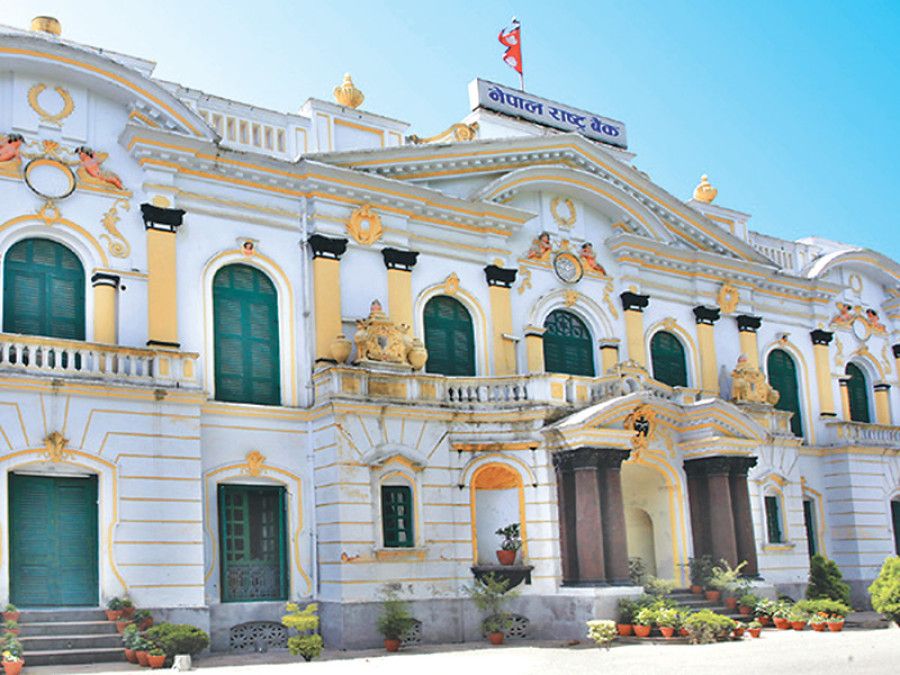
Banking on Boundaries: Central Bank Outlaws Forced Overtime in Financial Sector

Nepal’s banking sector is preparing for an operational shakeup following the central bank's decision to strictly enforce labor rights and penalize uncompensated overtime. Through a recent amendment to its Unified Directive 2082, the central bank has declared that employees cannot be forced to work past standard hours and must be compensated for any additional labor. This move introduces structural accountability into an industry historically reliant on informal, extended work hours during high-pressure cycles. Historically, banks only needed to drop a formal letter to the central bank to justify extended branch hours, completely bypassing the conversation on employee compensation. The newly inserted legal clause closes this loophole, mandating that any extra hours logged must be backed by financial remuneration mirroring the country's prevailing Labor Act. Consequently, bank managements lose the absolute authority to mandate long hours under the guise of financial "closing periods" or routine system migrations. While labor advocates view this as a landmark victory against white-collar labor exploitation, banking executives warn of practical roadblocks. Management teams argue that managing modern, round-the-clock digital platforms requires fluid, immediate technical support that does not always fit neatly into rigid shifts. As banks scramble to adjust their human resource models, the industry is expected to face immediate upward pressure on operational costs, forcing a transition toward more efficient shift-based employment models.

SEBON Approves 50% Right Share Issuance of NIC Asia Bank Worth Rs 7.45 Billion

The Securities Board of Nepal (SEBON) has granted preliminary approval to NIC Asia Bank Limited to issue 50 percent right shares at a 1:0.50 ratio. The bank will issue 74,587,835 shares worth Rs 7.45 billion at a face value of Rs 100 per share.

NRB to Sell Gold Coins and Silver Medallions for Tihar from November 5

Nepal Rastra Bank (NRB) will sell 2.5-gram gold coins and 10-gram silver medallions featuring Goddess Laxmi and Lord Ganesh on November 5 and 6 (Kartik 19 and 20) from its Minting Division in Babarmahal, Kathmandu.

Himalayan Laghubitta Proposes 5% Dividend for FY 2082/83

Himalayan Laghubitta (HLBSL) has proposed a 5% dividend for shareholders, comprising 4.75% bonus shares and 0.25% cash dividend for the fiscal year 2082/83.

Rastriya Banijya Bank Reports 175.52% Growth in Q1 Net Profit

Rastriya Banijya Bank Limited has reported a remarkable 175.52% year-on-year growth in net profit, earning Rs. 1.64 billion in the first quarter of FY 2083/84, compared to Rs. 598.73 million in the corresponding period of the previous fiscal year. The significant growth was driven by a sharp increase in net interest income and a substantial decline in impairment charges.

Kumari Bank Reports Rs. 1.07 Arba Net Profit in Q1; Operating Profit Jumps 32.39%

Kumari Bank Limited (KBL) has reported a modest 1.70% year-on-year growth in net profit, earning Rs. 1.07 billion in the first quarter of FY 2083/84, compared to Rs. 1.06 billion in the corresponding period last fiscal year. Despite a decline in net interest income, the bank recorded strong growth in operating profit, supported by a significant reduction in impairment charges and operating expenses.

NMB Bank Reports 27.11% Growth in First-Quarter Net Profit

NMB Bank Limited has reported a 27.11% year-on-year increase in net profit, earning Rs. 1.16 billion in the first quarter of FY 2083/84, compared to Rs. 915.98 million in the corresponding period of the previous fiscal year. The growth was supported by higher operating income, increased net interest income, and a significant decline in impairment charges.